

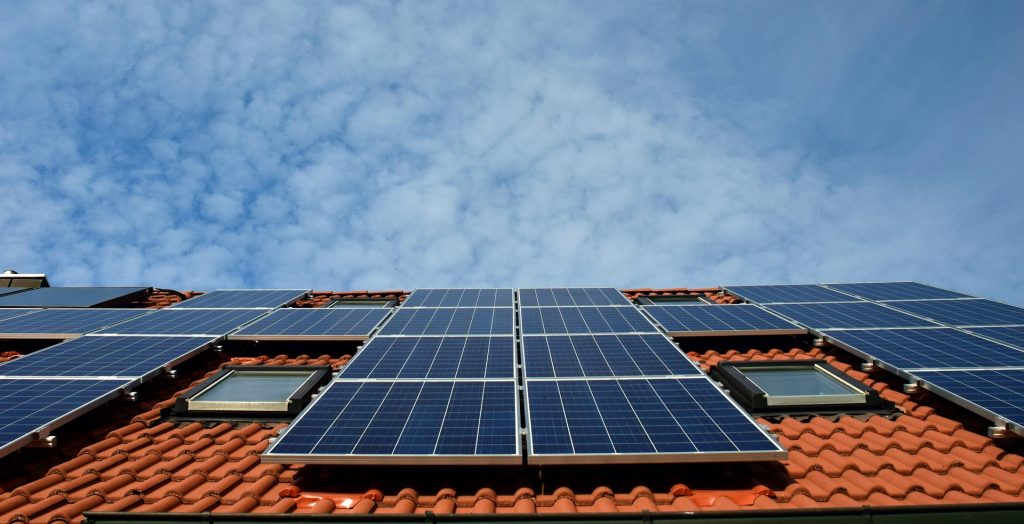
Living in a climate-friendly way is a widely shared aim, but paying for it is another matter. A survey of 3,000 households in Germany, conducted at the end of December 2025 within PREFIGURE, shows that almost three quarters of respondents expect energy costs to rise significantly. In addition, 65% say they can hardly or not at all afford a climate-friendly upgrade of their home. The share rises to 75% among tenants and falls to 55% among owner-occupiers.
PREFIGURE explores how energy renovation can be reconciled with affordable housing and social participation. To do so, it combines household surveys with local case studies in eleven European cities, including Karlsruhe. The project is coordinated by KIT’s Institute of Regional Science.
Tenants are often left out of decisions
Tenants frequently have little say in renovation decisions. Of the 1,126 tenants whose homes have undergone, or are due to undergo, energy upgrades, almost 78% report that they were involved little or not at all.
“Our analysis of the German data shows that concerns about rising energy costs are not linked only to a building’s renovation needs or to current housing costs,” says project coordinator Professor Michael Janoschka, Head of the Institute of Regional Science at KIT. “Tenants’ and owners’ room for manoeuvre, their knowledge of renewable technologies and their socio-economic situation also play a role.”
High cost burden, high concern
To compare concerns, the researchers built a “concern indicator” from three statements: one’s own energy prices are perceived as unfair; energy costs are expected to rise significantly; and climate-friendly renovation is seen as unaffordable. Respondents who agree with at least two of these are classed as highly concerned. This applies to 63% of respondents overall. Among households spending at least 15% of their net income on energy, the share rises to 79%, compared with 56% among those spending less than 5%. Among single parents, it stands at 75%.
Knowledge of renewables goes hand in hand with less concern
High concern appears less widespread among respondents who are familiar with renewable energy technologies, and among those who would be more willing to take part in a community-based energy transition. The survey does not establish whether this knowledge and these attitudes actually reduce concern, or whether other factors explain the difference.
Towards a socially just energy transition
The project team recommends reliable, socially graduated financial support with simple procedures and low upfront costs. Tenants, the researchers argue, need meaningful opportunities to take part in decisions, and renovation must remain financially manageable for them.
“People on low incomes must be able to access support without having to pay large sums up front. And people who rent need a say. Both are part of a socially just energy transition,” says Dennis Hof of the Federal Institute for Research on Building, Urban Affairs and Spatial Development (BBSR), who coordinates the German PREFIGURE survey.
The survey was carried out in seven countries: Germany, Bulgaria, Denmark, Estonia, Greece, the Netherlands and Spain. Initial analyses show marked differences between countries in how fair energy costs are perceived to be, alongside a widespread basic willingness to take part in the energy transition.
👉 Read the original press release (in German) on the KIT website: Befragung zu Energiekosten: Große Sorgen, begrenzter Spielraum für Sanierungen | KIT