

On 13 and 14 November, the PREFIGURE’s consortium gathered for two days of meetings and discussions in Malmö, hosted by project partner Malmö University (MAU).
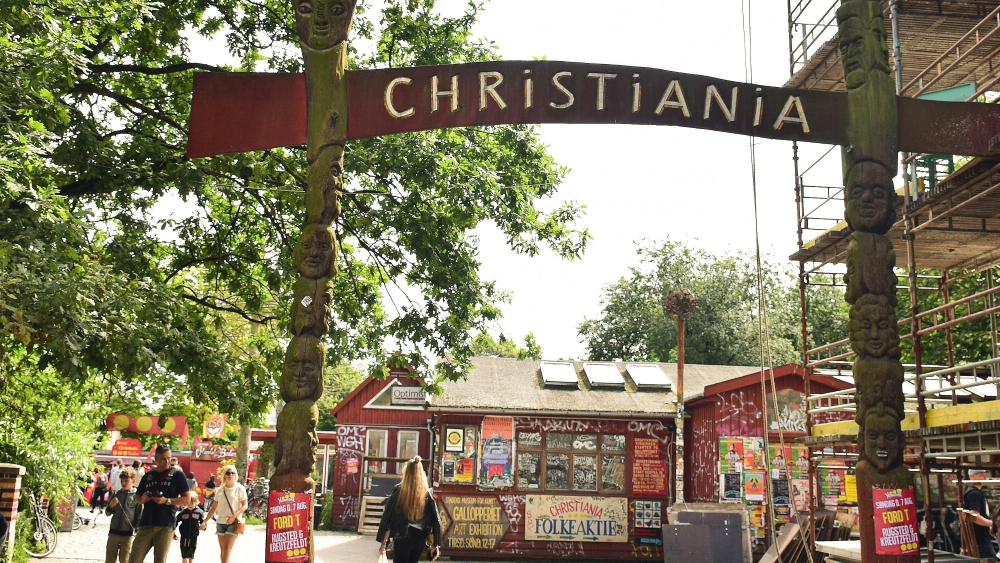
As part of the gathering, the MAU Institute for Urban Research team organised a guided tour in Freetown Christiania, Denmark. Christiania, just over an hour away from Malmö, is one of PREFIGURE’s Prototypes of Change, case studies on the housing-energy nexus across Europe.
Founded as a hippy commune in a central Copenhagen neighbourhood in the 1970s, Freetown Christiania is now home to around 900 residents and includes shops (selling for example the famous Christiania bikes), restaurants, a church, a kindergarten, conference rooms etc. Declared autonomous and legally independent from Denmark since its start, attempts to close it down have repeatedly failed. It is also considered Copenhagen’s fourth largest tourist attraction.
One of the residents, a carpenter who has been living in the community for about 15 years with his family, led the visit. Living in Christiania – he explained – also means actively participating in regular meetings where all decisions have to be made by consensus (including whether or not to accept newcomers). The tour included a stop at the once notorious Pusher Street; to put an end to the gang violence resulting in various deaths in recent years, the residents themselves dismantled it in April 2024.
Despite its central location, Christiania is not connected to Denmark’s extensive district heating network. Instead, the community has always strived to maintain its energy independence. From 2001, a new heating project, Nabovarme (Neighbour Heating), is also in place, leading to a gradual transition to wood pellets and providing users with open-source software/hardwate for data. Yet, energy poverty remains a pressing problem in Christiania. Residents also take care of their homes and surroundings themselves. Ownership is collective, with monthly fees for direct services paid to the Christiania Foundation.
Looking into Christiania and similar communities, the EU co-funded project PREFIGURE shines a spotlight on existing and emerging individual and collective efforts to actively produce alternative and innovative practices triggering a more just and sustainable housing and energy transition.
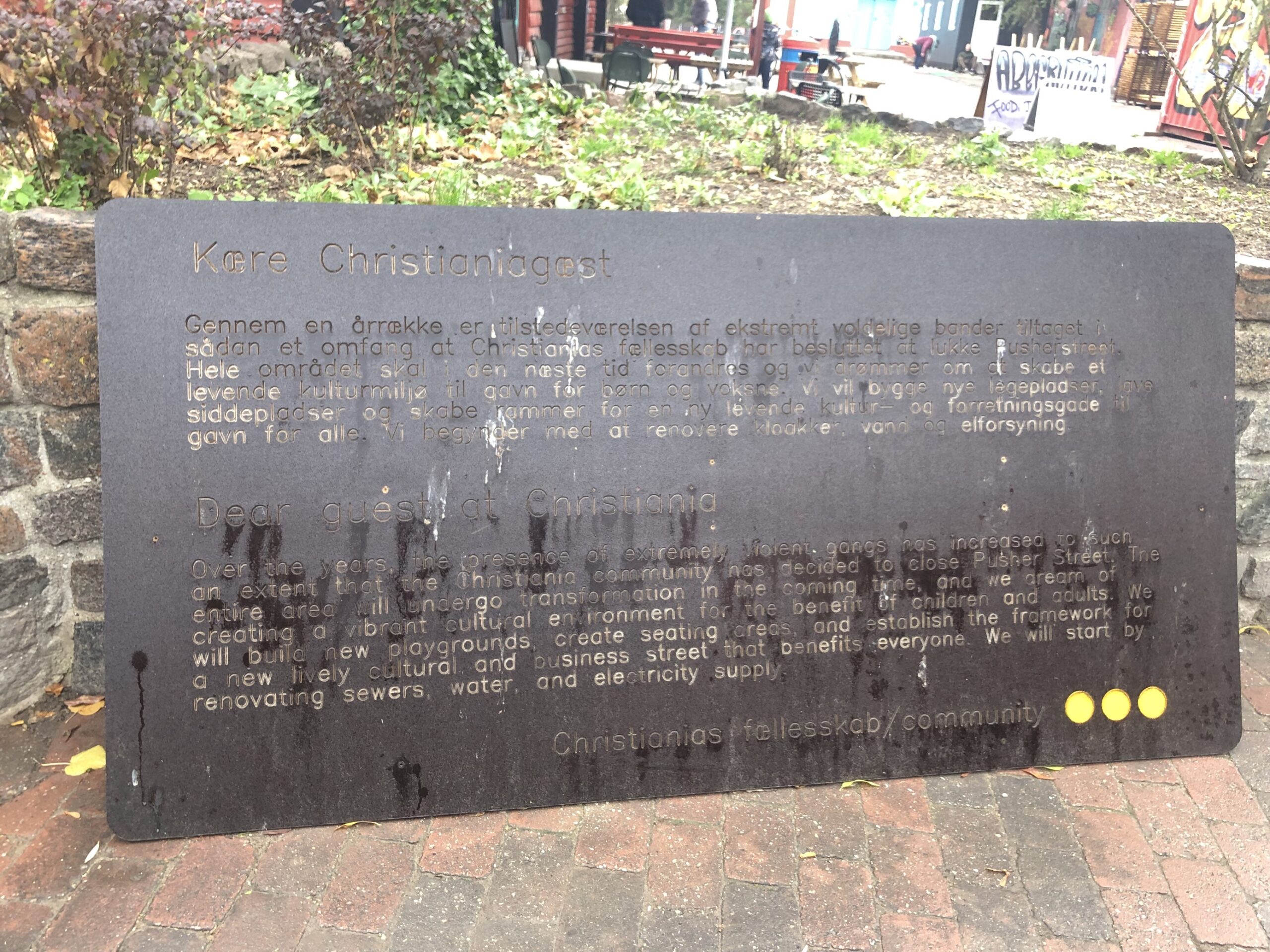
A sign in the former Pusher Street
Cover photo by rminedaisy on Unsplash