

THE PROTOTYPES OF CHANGE: A BOTTOM-UP APPROACH

Innovations for the
housing-energy
nexus
Prototypes of Change are defined as local initiatives of social, political and economic innovation targeting affordable housing renovation for vulnerable households and communities.
The project will use a bottom-up approach to thoroughly determine the potential for up-scaling of these prototypes. This approach lays the groundwork for co-creating learning communities through participatory research, facilitating interaction between researchers, residents, and policy makers. This process promotes knowledge transfer and creates opportunities for scaling up initiatives.
Consortium partners are conducting qualitative and ethnographic research to understand the factors driving each prototype and their impact on addressing housing and energy inequalities. By thoroughly documenting and analysing the specific legal, financial, institutional, social, and cultural elements that either support or hinder the development of these prototypes, the project will gain a holistic understanding of 16 different prototypes across Europe.

WG Ketelhuis
The WG-Ketelhuis project in Amsterdam is a community-driven energy initiative established in 2018 with the objective of transitioning a central neighbourhood from gas-based heating to the utilisation of heat sourced from nearby canals, which is stored underground and distributed via heat pumps for year-round heating.
The project emphasises common ownership, democratic decision-making, and a Do-It-With-Others (DIWO) approach, fostering social cohesion and empowering residents to govern their energy needs. As a prototype of social and frugal innovation, WG-Ketelhuis addresses energy inequities by offering a cost-effective, sustainable, and community-led alternative to traditional energy systems.

Non-profit Housing Associations
Non-profit housing associations (NPHAs) in Denmark provide affordable, democratically governed housing for approximately 20% of the population, supported by state subsidies and municipal oversight.
Governed by tenant-elected boards, these associations ensure cost-based rents and cater to diverse social groups, including students, the elderly, and the disabled. The sector also fosters energy communities, as evidenced by Øbro95, where residents, with support from the municipality and green software developer Enyday, installed solar panels and a battery system. While this model promotes sustainability and cost optimisation, challenges such as financing and scalability in less affluent areas remain critical issues for broader implementation.

Reviu Digital Platform
Reviu is an online platform launched in 2024 in Barcelona by the IDRA cooperative, facilitating the exchange of reviews from tenants on the quality of rental apartments and landlords. The platform was developed to address the shortcomings in housing equity and transparency within Spain’s rental sector, by incorporating tenant perspectives.
The evaluation encompasses aspects such as housing quality, thermal comfort, rent fairness, and landlord communication. The application of Reviu can be considered both a technological innovation and a communing practice, with the potential to foster a collaborative tenant community while promoting accountability in the rental sector.

Refugee squats and self-housing
A substantial body of research examines the living conditions within state-run refugee camps. However, little is known about refugee access to adequate energy and affordable housing outside of these camps.
PREFIGURE analyses collective actions and solidarity initiatives designed to address the energy poverty and substandard housing quality experienced by refugees in Greece. Moreover, the research focuses on self-housing and squatting arrangements by refugees, located in underprivileged neighbourhoods in city centres, mostly taxonomized in a low energy class, incurring high energy costs that refugees struggle to cover.
| TITLE | DESCRIPTION | LOCATION |
|---|---|---|
Prototype 1 – Refugee squats and self-housing | A substantial body of research examines the living conditions within state-run refugee camps. However, little is known about refugee access to adequate energy and affordable housing outside of these camps. PREFIGURE analyses collective actions and solidarity initiatives designed to address the energy poverty and substandard housing quality experienced by refugees in Greece. Moreover, the research focuses on self-housing and squatting arrangements by refugees, located in underprivileged neighbourhoods in city centres, mostly taxonomized in a low energy class, incurring high energy costs that refugees struggle to cover. | Thessaloniki, GR – UvA |
Prototype 2 – Christiania | Christiania, an autonomous neighbourhood in the center of Copenhagen, Denmark. Established in 1971 by activists and artists, it functions on the principles of collective ownership of land and assets, emphasising affordability and self-governance. The housing is non-commodified, with rents way below the average for the area, funding community needs, and homes maintained by residents. The Nabovarme project, initiated in 2001, introduced renewable energy solutions, transforming heating into a collective effort using wood pellets, solar energy, and geothermal systems integrated into a Thermonet. By prioritising renewable energy sources, practices involving Do-It-Yourself (DIY) initiatives and collective strategies, Christiania offers an innovative community-driven prototype for addressing the Housing-Energy Nexus. | Copenhagen, DK – MAU |
Prototype 3 – CommonEN | The energy cooperative CommonEn, established in 2021 in Ioannina, Greece, launched its first solar park in 2023. This initiative has the capacity to provide electricity to 35 households and local small and medium enterprises (SMEs). Supported by the organisation Electra Energy, the cooperative is dedicated to promoting sustainable energy and addressing energy poverty. Operating in a region characterised by high unemployment and an ageing population, CommonEn represents a grassroots social innovation for community-centred energy solutions. | Ioannina, GR – IMPERIAL |
Prototype 4 – Ketelhuis WG | The WG-Ketelhuis project in Amsterdam is a community-driven energy initiative established in 2018 with the objective of transitioning a central neighbourhood from gas-based heating to the utilisation of heat sourced from nearby canals, which is stored underground and distributed via heat pumps for year-round heating. The project emphasises common ownership, democratic decision-making, and a Do-It-With-Others (DIWO) approach, fostering social cohesion and empowering residents to govern their energy needs. As a prototype of social and frugal innovation, WG-Ketelhuis addresses energy inequities by offering a cost-effective, sustainable, and community-led alternative to traditional energy systems. | Amsterdam, NL – UVA |
Prototype 5 – Reviu | Reviu is an online platform launched in 2024 in Barcelona by the IDRA cooperative, facilitating the exchange of reviews from tenants on the quality of rental apartments and landlords. The platform was developed to address the shortcomings in housing equity and transparency within Spain’s rental sector, by incorporating tenant perspectives. The evaluation encompasses aspects such as housing quality, thermal comfort, rent fairness, and landlord communication. The application of Reviu can be considered both a technological innovation and a communing practice, with the potential to foster a collaborative tenant community while promoting accountability in the rental sector. | Barcelona, ES – IDRA |
Prototype 6 – Non-profit Housing Associations | Non-profit housing associations (NPHAs) in Denmark provide affordable, democratically governed housing for approximately 20% of the population, supported by state subsidies and municipal oversight. Governed by tenant-elected boards, these associations ensure cost-based rents and cater to diverse social groups, including students, the elderly, and the disabled. The sector also fosters energy communities, as evidenced by Øbro95, where residents, with support from the municipality and green software developer Enyday, installed solar panels and a battery system. While this model promotes sustainability and cost optimisation, challenges such as financing and scalability in less affluent areas remain critical issues for broader implementation. | Denmark, DK – MAU |
Prototype 7 – WikiHousing | WikiHousing is a participatory initiative in Barcelona that delivers affordable, sustainable public housing through co-design and community involvement. The initiative was founded by architects David Baró and David Juárez, with the objective of addressing the issue of housing affordability. The project utilises lightweight balloon frame construction and modular design, representing an innovative approach to the challenges posed by the availability of land, housing and energy in the city. Supported by the city’s BIT Habitat Foundation, its aims at empowering residents to co-create and manage their homes. In this way, WiKiHousing combines blending technological innovation with participatory governance to promote community-led urban design. | Barcelona, ES – IDRA |
Prototype 8 – Brixton Energy | Brixton Energy, a citizen-led cooperative based in South London, is an organisation that promotes clean, renewable energy sources while ensuring tangible benefits for the local community. Through active community engagement, shareholder participation, and the creation of green jobs, Brixton Energy reinvests its profits into a Community Energy Efficiency Fund (CEEF) to further its impact. Operating as a community-owned cooperative, it collaborates with the local borough administration, which provides financial and institutional support, fostering sustainable, community-centred energy solutions. | London, UK – IMPERIAL |
Prototype 9 – CODE HOUSING Microloans | Habitat Bulgaria, a constituent element of the global Habitat for Humanity network, is dedicated to the enhancement of living conditions for vulnerable families through the provision of affordable housing, advocacy, and energy efficiency initiatives. In 2022, it initiated the CODE HOUSING programme, offering microfinance solutions and life skills workshops to improve housing and community resilience in six Bulgarian cities. The programme promotes energy efficiency through both basic and renewable energy solutions, fostering community empowerment and collaboration with local NGOs, authorities, and experts. The CODE HOUSING initiative is noteworthy for its comprehensive approach, integrating financial innovation, capacity building, and sustainable development for marginalised communities. | Burgas, BG – CSD |
Prototype 10 – One Stop Shop Energy Centres | Bulgaria’s one-stop-shop (OSS) initiatives for housing/ energy upgrades highlights a service model that facilitates energy efficiency and renewable energy improvements for residential buildings. The establishment of the first municipal energy centres in Gabrovo and Burgas has been instrumental in consolidating expert advice, financial assistance, and regulatory guidance, thereby making energy upgrades accessible to low-income families. The centres have been found to empower citizens through the facilitation of workshops, whilst reducing administrative barriers and promoting sustainable solutions that ensure cost-effective home improvements. This initiative is part of the Bulgarian Recovery and Resilience Plan, which aims to make energy-efficient renovations both achievable and sustainable for all. | Bulgaria, BG – CSD |
Prototype 11 – Housing Thessaloniki | The pilot programme Housing Thessaloniki, Greece, has been devised to address both the housing crisis and energy poverty by renovating 30 apartments into safe, affordable, and energy-efficient publicly-owned housing. Vacant and underused properties have been identified as the target of this initiative, with the aim of integrating them into a network of affordable housing for low-income households. A collaborative effort involving state bodies, local organisations, and the municipality, presents a sustainable alternative to the conventional housing market by providing immediate relief and long-term solutions for housing insecurity. | Thessaloniki, GR – KIT |
Prototype 12 – Energy District | The KfW432 subsidy in Germany, which was available to citizens from 2011 to 2024, supported the creation of energy districts under the “energy efficient urban redevelopment” programme by KfW Bank. Following the subsidy’s termination in 2024, the Karlsruhe Energy and Climate Protec-tion Agency (KEK), a non-profit organisation established by the city, has continued to promote energy districts. The primary focus of the KEK has been on the provision of advisory services to households in these districts, initially through direct visits and more recently through the establishment of information points and the dissemination of information materials via postal mail. This ensures the ongoing implementation of energy efficiency initiatives in urban redevelopment. | Karlsruhe, DE – KIT |
Prototype 13 – Mustamäe | Mustamäe is Tallinn’s first neighbourhood-based renovation project, demonstrating inclusive and integrated energy retrofit activities across several buildings. Following the European New Bauhaus principles of inclusiveness, beauty, and sustainability, the project involves various homeowners’ associations. Its main challenges include enhancing energy efficiency and improving the quality of housing and the environment, while ensuring resident needs are considered inclusively. The prototype links housing renovation, energy transition, and social inclusion, introducing policy and governance innovations to make retrofitting more inclusive, coordinated, and climate-resilient. | Tallinn, ET – UT |
Prototype 14 – Karlova | Karlova in Tartu is a resident-led renovation of a small, historic wooden building, typical of Estonia’s inner cities and home to low-income and elderly residents. Facing poor conditions and no access to national renovation funds, residents organised a step-by-step retrofitting strategy to avoid displacement and maintain affordability. Despite limited support and high costs due to Heritage protection rules, the initiative demonstrates a scalable, socially inclusive model for renovating vulnerable housing in milieu-protected zones. | Tartu, ET – UT |
Prototype 15 – Thermo Bello
| Thermo Bello is a community-owned heat network in the EVA-Lanxmeer eco-village, active since 2008. It supplies heat to over 200 homes, a school, workspaces, and shops using residual heat from a local drinking water company. Operated daily by a small team of six, its fully self-maintained system exemplifies sustainable, small-scale, cooperative energy solutions and serves as a national model for neighbourhood-based heat networks. | Culemborg, NL – UVA |
Prototype 16 – Housing acquisition through cooperation
| Housing acquisition through cooperation is a municipal policy instrument within the city of Karlsruhe that has been in existence since 2005. It follows a certain governance; The Housing Security Unit of the Youth and Social Welfare Department is responsible for implementing a cooperative housing acquisition procedure in the associated housing agency. This involves a private owner offering the housing agency an apartment or a building with several apartments. In the next step, the agency and the owner sign a 10-year occupancy agreement, with the agency giving the owner a renovation subsidy and a rent guarantee in case of rent defaults. Former homeless people initially receive a one-year usage agreement for the apartment from the Youth and Social Welfare Office. If the temporary tenancy arrangement is successful, the aim is to conclude an independent tenancy agreement between the owner and the tenant. The Social Welfare Office has furthermore hired its own social educators who can support vulnerable residents as needed in order to promote their Independence. | Karlsruhe, DE – KIT |
| TITLE / DESCRIPTION | LOCATION |
|---|---|
Prototype 1 – Refugee squats and self-housingA substantial body of research examines the living conditions within state-run refugee camps. However, little is known about refugee access to adequate energy and affordable housing outside of these camps. PREFIGURE analyses collective actions and solidarity initiatives designed to address the energy poverty and substandard housing quality experienced by refugees in Greece. Moreover, the research focuses on self-housing and squatting arrangements by refugees, located in underprivileged neighbourhoods in city centres, mostly taxonomized in a low energy class, incurring high energy costs that refugees struggle to cover. | Thessaloniki, GR – UvA |
Prototype 2 – ChristianiaChristiania, an autonomous neighbourhood in the center of Copenhagen, Denmark. Established in 1971 by activists and artists, it functions on the principles of collective ownership of land and assets, emphasising affordability and self-governance. The housing is non-commodified, with rents way below the average for the area, funding community needs, and homes maintained by residents. The Nabovarme project, initiated in 2001, introduced renewable energy solutions, transforming heating into a collective effort using wood pellets, solar energy, and geothermal systems integrated into a Thermonet. By prioritising renewable energy sources, practices involving Do-It-Yourself (DIY) initiatives and collective strategies, Christiania offers an innovative community-driven prototype for addressing the Housing-Energy Nexus. | Copenhagen, DK – MAU |
Prototype 3 – CommonENThe energy cooperative CommonEn, established in 2021 in Ioannina, Greece, launched its first solar park in 2023. This initiative has the capacity to provide electricity to 35 households and local small and medium enterprises (SMEs). Supported by the organisation Electra Energy, the cooperative is dedicated to promoting sustainable energy and addressing energy poverty. Operating in a region characterised by high unemployment and an ageing population, CommonEn represents a grassroots social innovation for community-centred energy solutions. | Ioannina, GR – IMPERIAL |
Prototype 4 – Ketelhuis WGThe WG-Ketelhuis project in Amsterdam is a community-driven energy initiative established in 2018 with the objective of transitioning a central neighbourhood from gas-based heating to the utilisation of heat sourced from nearby canals, which is stored underground and distributed via heat pumps for year-round heating. The project emphasises common ownership, democratic decision-making, and a Do-It-With-Others (DIWO) approach, fostering social cohesion and empowering residents to govern their energy needs. As a prototype of social and frugal innovation, WG-Ketelhuis addresses energy inequities by offering a cost-effective, sustainable, and community-led alternative to traditional energy systems. | Amsterdam, NL – UVA |
Prototype 5 – ReviuReviu is an online platform launched in 2024 in Barcelona by the IDRA cooperative, facilitating the exchange of reviews from tenants on the quality of rental apartments and landlords. The platform was developed to address the shortcomings in housing equity and transparency within Spain’s rental sector, by incorporating tenant perspectives. The evaluation encompasses aspects such as housing quality, thermal comfort, rent fairness, and landlord communication. The application of Reviu can be considered both a technological innovation and a communing practice, with the potential to foster a collaborative tenant community while promoting accountability in the rental sector. | Barcelona, ES – IDRA |
Prototype 6 – Non-profit Housing AssociationsNon-profit housing associations (NPHAs) in Denmark provide affordable, democratically governed housing for approximately 20% of the population, supported by state subsidies and municipal oversight. Governed by tenant-elected boards, these associations ensure cost-based rents and cater to diverse social groups, including students, the elderly, and the disabled. The sector also fosters energy communities, as evidenced by Øbro95, where residents, with support from the municipality and green software developer Enyday, installed solar panels and a battery system. While this model promotes sustainability and cost optimisation, challenges such as financing and scalability in less affluent areas remain critical issues for broader implementation. | Denmark, DK – MAU |
Prototype 7 – WikiHousingWikiHousing is a participatory initiative in Barcelona that delivers affordable, sustainable public housing through co-design and community involvement. The initiative was founded by architects David Baró and David Juárez, with the objective of addressing the issue of housing affordability. The project utilises lightweight balloon frame construction and modular design, representing an innovative approach to the challenges posed by the availability of land, housing and energy in the city. Supported by the city’s BIT Habitat Foundation, its aims at empowering residents to co-create and manage their homes. In this way, WiKiHousing combines blending technological innovation with participatory governance to promote community-led urban design. | Barcelona, ES – IDRA |
Prototype 8 – Brixton EnergyBrixton Energy, a citizen-led cooperative based in South London, is an organisation that promotes clean, renewable energy sources while ensuring tangible benefits for the local community. Through active community engagement, shareholder participation, and the creation of green jobs, Brixton Energy reinvests its profits into a Community Energy Efficiency Fund (CEEF) to further its impact. Operating as a community-owned cooperative, it collaborates with the local borough administration, which provides financial and institutional support, fostering sustainable, community-centred energy solutions. | London, UK – IMPERIAL |
Prototype 9 – CODE HOUSING MicroloansHabitat Bulgaria, a constituent element of the global Habitat for Humanity network, is dedicated to the enhancement of living conditions for vulnerable families through the provision of affordable housing, advocacy, and energy efficiency initiatives. In 2022, it initiated the CODE HOUSING programme, offering microfinance solutions and life skills workshops to improve housing and community resilience in six Bulgarian cities. The programme promotes energy efficiency through both basic and renewable energy solutions, fostering community empowerment and collaboration with local NGOs, authorities, and experts. The CODE HOUSING initiative is noteworthy for its comprehensive approach, integrating financial innovation, capacity building, and sustainable development for marginalised communities. | Burgas, BG – CSD |
Prototype 10 – One Stop Shop Energy CentresBulgaria’s one-stop-shop (OSS) initiatives for housing/ energy upgrades highlights a service model that facilitates energy efficiency and renewable energy improvements for residential buildings. The establishment of the first municipal energy centres in Gabrovo and Burgas has been instrumental in consolidating expert advice, financial assistance, and regulatory guidance, thereby making energy upgrades accessible to low-income families. The centres have been found to empower citizens through the facilitation of workshops, whilst reducing administrative barriers and promoting sustainable solutions that ensure cost-effective home improvements. This initiative is part of the Bulgarian Recovery and Resilience Plan, which aims to make energy-efficient renovations both achievable and sustainable for all. | Bulgaria, BG – CSD |
Prototype 11 – Housing ThessalonikiThe pilot programme Housing Thessaloniki, Greece, has been devised to address both the housing crisis and energy poverty by renovating 30 apartments into safe, affordable, and energy-efficient publicly-owned housing. Vacant and underused properties have been identified as the target of this initiative, with the aim of integrating them into a network of affordable housing for low-income households. A collaborative effort involving state bodies, local organisations, and the municipality, presents a sustainable alternative to the conventional housing market by providing immediate relief and long-term solutions for housing insecurity. | Thessaloniki, GR – KIT |
Prototype 12 – Energy DistrictThe KfW432 subsidy in Germany, which was available to citizens from 2011 to 2024, supported the creation of energy districts under the “energy efficient urban redevelopment” programme by KfW Bank. Following the subsidy’s termination in 2024, the Karlsruhe Energy and Climate Protec-tion Agency (KEK), a non-profit organisation established by the city, has continued to promote energy districts. The primary focus of the KEK has been on the provision of advisory services to households in these districts, initially through direct visits and more recently through the establishment of information points and the dissemination of information materials via postal mail. This ensures the ongoing implementation of energy efficiency initiatives in urban redevelopment. | Karlsruhe, DE – KIT |
Prototype 13 – MustamäeMustamäe is Tallinn’s first neighbourhood-based renovation project, demonstrating inclusive and integrated energy retrofit activities across several buildings. Following the European New Bauhaus principles of inclusiveness, beauty, and sustainability, the project involves various homeowners’ associations. Its main challenges include enhancing energy efficiency and improving the quality of housing and the environment, while ensuring resident needs are considered inclusively. The prototype links housing renovation, energy transition, and social inclusion, introducing policy and governance innovations to make retrofitting more inclusive, coordinated, and climate-resilient. | Tallinn, ET – UT |
Prototype 14 – KarlovaKarlova in Tartu is a resident-led renovation of a small, historic wooden building, typical of Estonia’s inner cities and home to low-income and elderly residents. Facing poor conditions and no access to national renovation funds, residents organised a step-by-step retrofitting strategy to avoid displacement and maintain affordability. Despite limited support and high costs due to Heritage protection rules, the initiative demonstrates a scalable, socially inclusive model for renovating vulnerable housing in milieu-protected zones. | Tartu, ET – UT |
Prototype 15 – Thermo Bello
Thermo Bello is a community-owned heat network in the EVA-Lanxmeer eco-village, active since 2008. It supplies heat to over 200 homes, a school, workspaces, and shops using residual heat from a local drinking water company. Operated daily by a small team of six, its fully self-maintained system exemplifies sustainable, small-scale, cooperative energy solutions and serves as a national model for neighbourhood-based heat networks. | Culemborg, NL – UVA |
Prototype 16 – Housing acquisition through cooperation
Housing acquisition through cooperation is a municipal policy instrument within the city of Karlsruhe that has been in existence since 2005. It follows a certain governance; The Housing Security Unit of the Youth and Social Welfare Department is responsible for implementing a cooperative housing acquisition procedure in the associated housing agency. This involves a private owner offering the housing agency an apartment or a building with several apartments. In the next step, the agency and the owner sign a 10-year occupancy agreement, with the agency giving the owner a renovation subsidy and a rent guarantee in case of rent defaults. Former homeless people initially receive a one-year usage agreement for the apartment from the Youth and Social Welfare Office. If the temporary tenancy arrangement is successful, the aim is to conclude an independent tenancy agreement between the owner and the tenant. The Social Welfare Office has furthermore hired its own social educators who can support vulnerable residents as needed in order to promote their Independence. | Karlsruhe, DE – KIT |
LATEST UPDATE
News & Events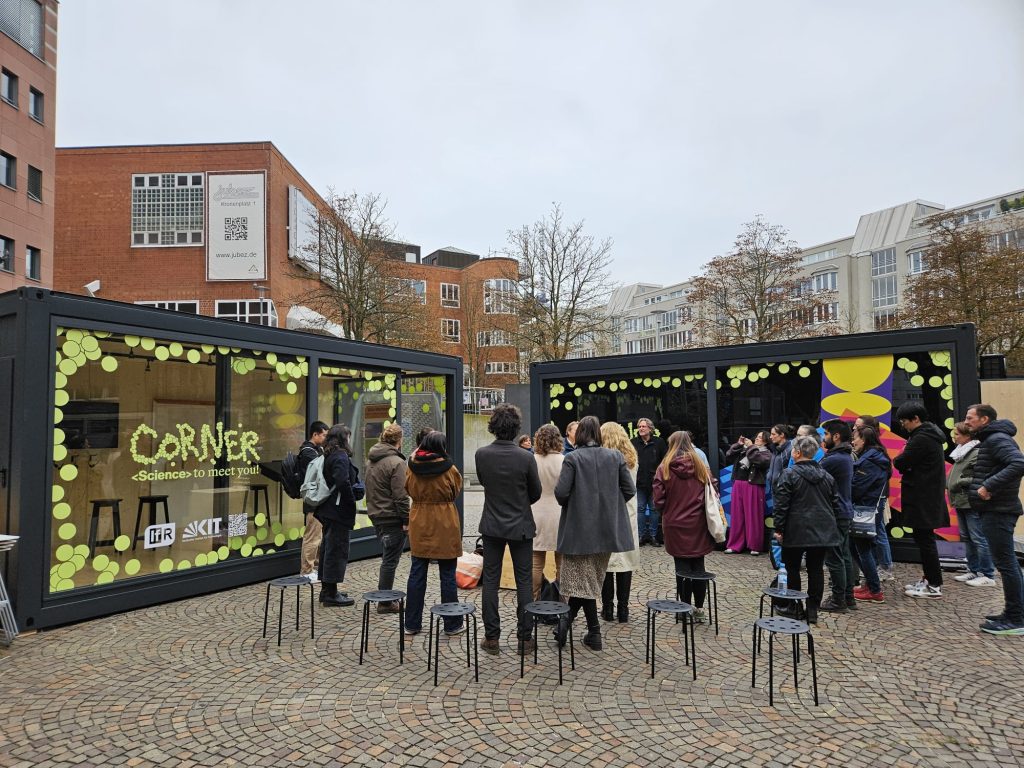
Energy poverty solutions on the go: the knowledge transfer lab comes to town!
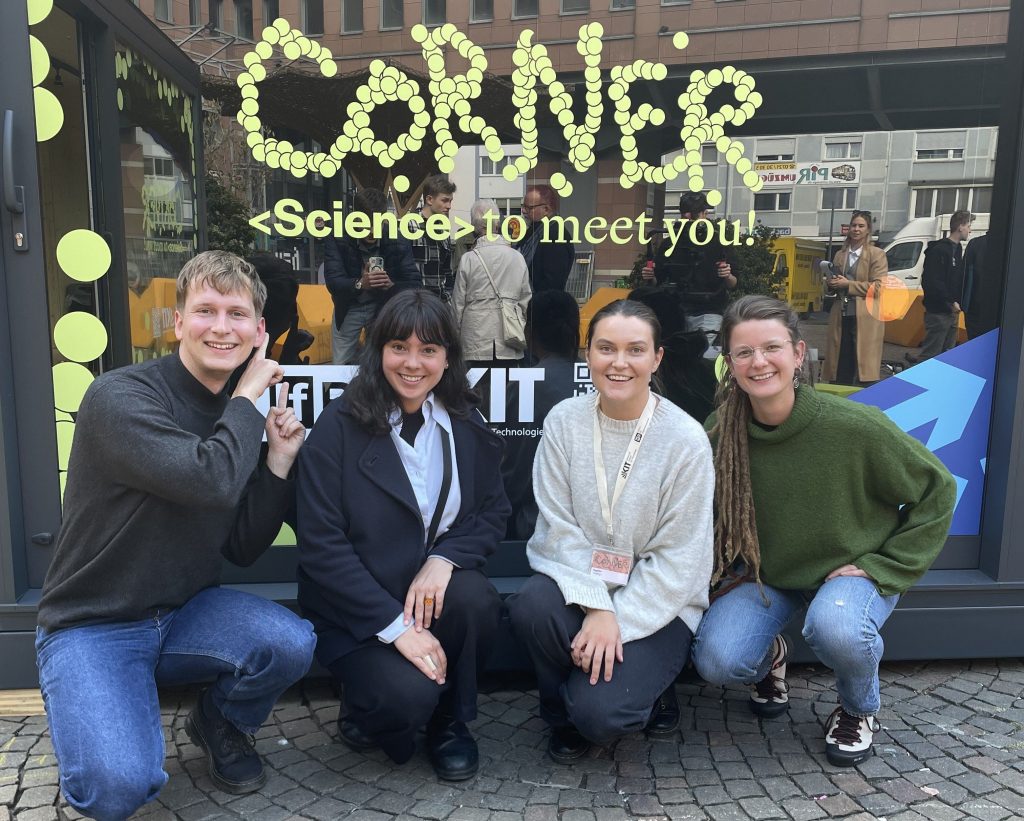
From 20 April to 22 April 2026, the mobile laboratory corner

Energy as social relation: PREFIGURE’s first scientific publication
By Maria Kaika and Charalampos Tsavdaroglou (University of Amsterdam)
PREFIGURE’s third newsletter
corner
<SCIENCE> TO MEET YOU!