

Energy District
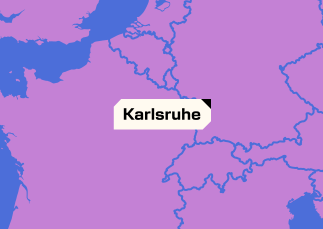
In Germany, energy districts have been supported by the KfW432 subsidy (an energy-efficient urban redevelopment programme run by the state-owned KfW Bank from 2011 to 2024). Following the termination of the subsidy, the Karlsruhe Energy and Climate Protection Agency (KEK) continued to promote energy districts by providing households with advisory services, direct visits, information points and information material.

KEY
CHALLENGES
Local advisors restricted, limited monitoring of impact

MAIN
IMPACT
Neighbourhood-level awareness raising and advisory services

UPSCALING
POTENTIAL
Integration into municipal
heat planning

ACTORS
Initiators
- Institutional: City of Karlsruhe.
- Market: the KfW-Bank (Federal Credit Bank), with the financial programme ‘energy-efficient under redevelopment’
- NGOs / Research Institutes: Department for Urban Planning at the Karlsruhe Energy and Climate Agency (KEK), a non-profit limited liability company.
Current actors
- Citizen groups / communities: Waldstadt Citizens Association.
- Institutional: Municipal Housing Company, Social Democratic Party, and Mayor for Social and Ecological Affairs.
- Market: Karlsruhe Energy Service Company.
- NGOs / Research Institutes: Karlsruhe Energy and Climate Agency
Beneficiaries
- Homeowners gain increased awareness and knowledge of the energy transition and efficiency to help them decide on changes to their home infrastructure (e.g. replacing heating systems or installing solar panels).
- Tenants also attend continue education training modules and event to raise awareness.
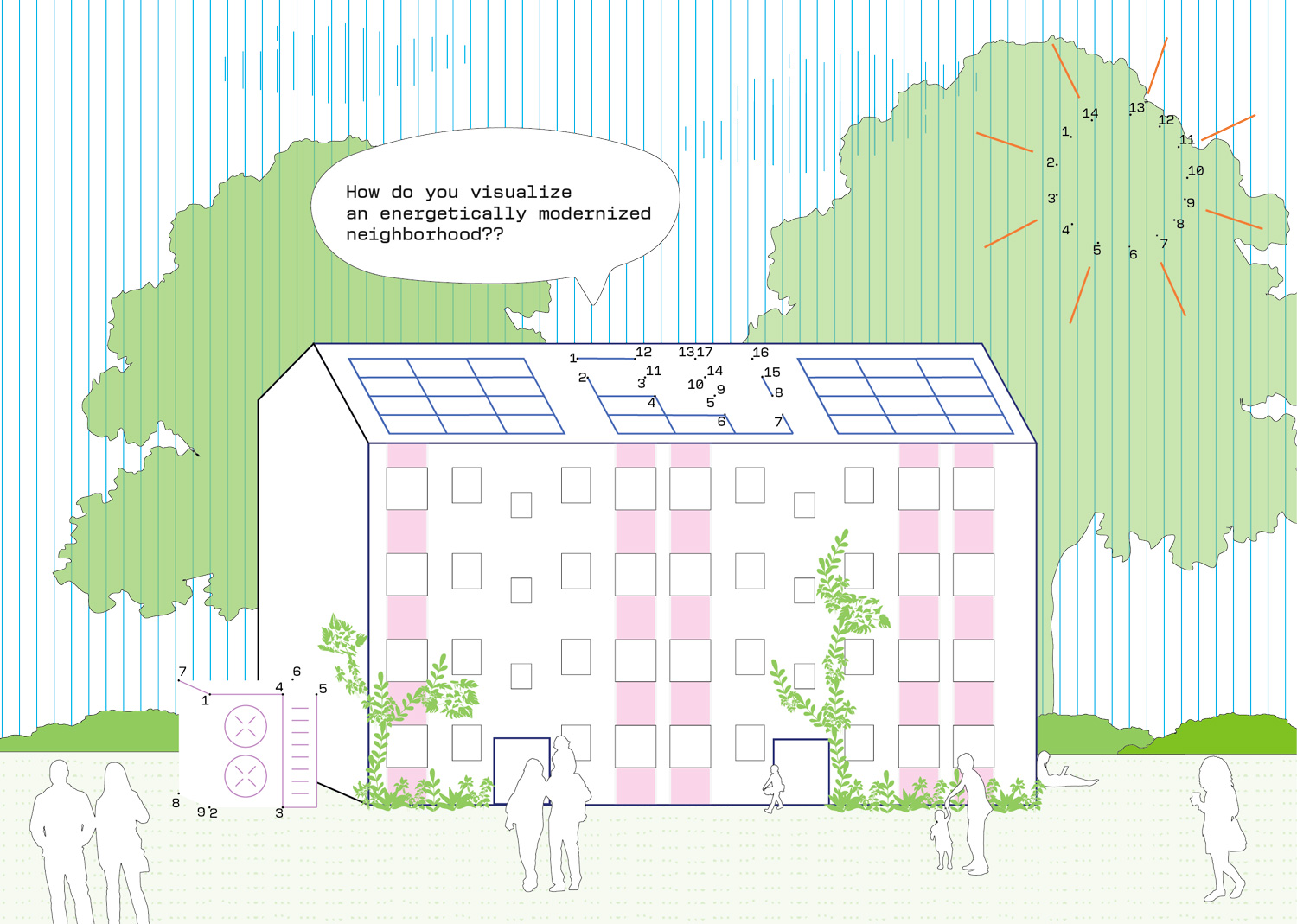
Created by the KIT team
CHALLENGES
In Karlsruhe, local and municipal energy consultants cannot make full use of their expertise, since only experts listed at a federal level can apply for subsidies or draw up renovation plans through the Federal Office for Economic Affairs and Export Control (BAFA) or the KfW. This means valuable support goes unused, and the impact of local initiatives such as building upgrades or solar installations is not tracked.
INNOVATION
- A region-based approach to reducing energy consumption.
- Focus on public education and raising awareness of energy-efficient modernisation and renewable energy technologies.
Blocking factors
- Institutional: the expertise of energy consultants at local energy agencies cannot be utilised to its full potential due to legislation stipulating that local public services must not compete with free market energy consultants
Facilitating factors
- Financial: until 2023, energy districts were financially supported by the KfW Bank through the ‘energy-efficient urban redevelopment’ financial programme.
- Institutional: energy districts have been part of the local climate protection plan since 2020, supporting the establishment of local heating networks.
IMPACTS
Community Impact
Since 2016, energy districts in Karlsruhe have sparked strong community engagement through local contacts and personal outreach by the Energy Agency. Staff visited every household and organised neighbourhood walks to raise awareness. Today, communication is limited to post, thus reducing the personal connection and impact.
Policy Impact
Public municipal energy advisors should also be able to draw up renovation roadmaps or provide assistance in completing subsidy applications.
- Buildings with 100 or more residential units should not be occupied exclusively by vulnerable people. Smaller units in a building should be rented to vulnerable people through cooperative housing acquisition. Mixed usages of space, in addition to housing, could transform the space into a more liveable place.
UPSCALING
POTENTIAL
Based on experience in energy districts, the Energy Agency could implement mandatory municipal heat planning. Since 2020, the city of Karlsruhe’s climate protection plan has aimed to expand the energy district initiative of the municipal Energy Agency.
EXPLORE ALL
PREFIGURE’s ‘Prototypes of Change‘ showcase 16 innovative, real-life responses to energy-housing precarity in the form of social, political, and economic solutions across eight countries: Bulgaria, Denmark, Estonia, Germany, Greece, Spain, Sweden and the Netherlands.