

KetelhuisWG
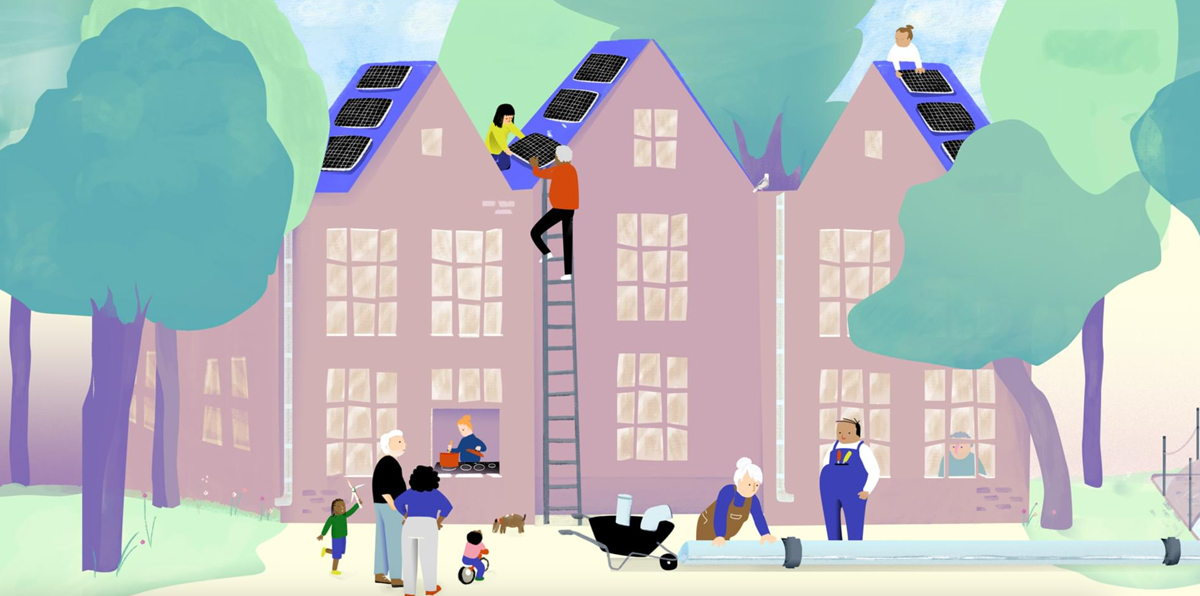
Established in 2018, KetelhuisWG in Amsterdam is a community-driven energy initiative that aims to transition a central neighbourhood heating source from gas to heating from nearby canals. Heat is stored underground and distributed via heat pumps to provide heating all year round. The project emphasises common ownership and democratic decision-making, fostering social cohesion and empowering residents to take control of their energy needs. By providing a cost-effective, sustainable, and community-led alternative to traditional energy systems with common property, KetelhuisWG addresses energy inequities.


KEY
CHALLENGES
Resident support, mixed building stock, tenure diversity

MAIN
IMPACT
Inclusive high temperature canal-based heating; community owned governance

UPSCALING
POTENTIAL
1270 homes possible; replicable neighbourhood model

ACTORS
Initiators
- Citizen groups/communities: residents have initiated KetelhuisWG in 2018. The first houses are expected to be connected to the heat network in April 2026.
Current actors
- Citizen groups/communities: the KetelhuisWG core group, the neighbourhood community centre in (Toekomsthuisje), homeowners’ associations (VvE’s) and neighbourhood residents who can vote at the general assembly.
- Institutional: the Municipality of Amsterdam, Waternet (water board), Amstel Gooi Vecht (water board), Stadgenoot (social housing corporation) and Liander (energy provider).
- Market: Barentz Krans (legal advice), and multiple freelancers who collaborate with the BV (private limited company), which is 100% owned by the KetelhuisWG cooperative. At the time of writing, there are six contractors led by KetelhuisWG. KetelhuisWG will own all infrastructure.
Beneficiaries
Residents and workers will benefit from more sustainable and democratic energy solutions.
Created by Iris Frankhuizen
CHALLENGES
- Securing residents’ support for the energy transition.
- Uneven age and quality of the building stock.
- Diverse tenure status and ownership.
INNOVATION
- A high-temperature network allows for an energy transition without the need for immediate renovations to buildings. This approach is more inclusive, as it enables housing corporations and private owners with limited resources to renovate at their own pace.
- Community ownership and democratic decision-making strengthen social ties and empower residents to take control of their energy use. The use of local resources, such as canal heat, provides a low-cost, reliable alternative to fossil energy.
Blocking factors
- Financial: heavy reliance on subsidies, which are difficult to access and require navigating complex funding procedures.
- Institutional: decisions must be reviewed and approved by the Municipality (co-funder), which leads to significant delays and slow implementation.
- Technical: the uneven quality of the building stock poses challenges to the collective renovation plans.
Facilitating factors
- Institutional: municipal policy definition of energy communities, and a municipal statement to support them,
- Financial: municipal and national subsidies.
- Socio-technical: the project relies on proven technologies and a socially active community with shared infrastructure and public land ownership.
IMPACTS
Community Impact
Community engagement through collective decision-making and the spread of inclusive information through door-to-door actions to reach all neighbours.
Policy Impact
Institutions such as municipalities and housing corporations must adapt to the collaborative, horizontal working style of community-led initiatives. Trust in self-organisation was crucial in shifting the project’s trajectory and enabling progress. Strengthening civil-public collaboration is essential for supporting such innovative models.
UPSCALING
POTENTIAL
If everyone agrees, around 1,270 homes and workplaces could be heated by this neighbourhood system in the near future. It is a testing ground for replicable energy solutions across other neighbourhoods. With its variety of housing types, building conditions, and tenure, it provides context-specific insights. It actively shares knowledge through workshops and open-access resources, including its business plan, to support similar projects.
EXPLORE ALL
PREFIGURE’s ‘Prototypes of Change‘ showcase 16 innovative, real-life responses to energy-housing precarity in the form of social, political, and economic solutions across eight countries: Bulgaria, Denmark, Estonia, Germany, Greece, Spain, Sweden and the Netherlands.