

Karlova
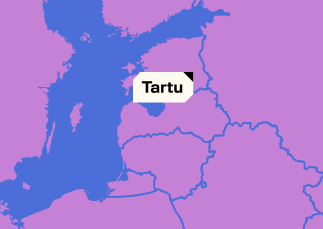
Karlova in Tartu is a resident-led renovation project involving a small, historic wooden building typical of Estonia’s inner cities. The building is home to low-income and elderly residents. Faced with poor conditions and no access to national renovation funds, the residents organised a step-by-step retrofitting strategy to avoid displacement and maintain affordability. Despite facing limited support and high costs due to heritage protection rules, this initiative demonstrates a scalable, socially inclusive model for renovating vulnerable housing in conservation areas.


KEY
CHALLENGES
Heritage rules, limited
funding, displacement
risk

MAIN
IMPACT
Stepwise affordable
renovation led by residents

UPSCALING
POTENTIAL
Knowledge exchange via local events; scalable to similar historic areas

ACTORS
Initiators
- Citizen groups / communities: residents of the Karlova building.
- Institutional: housing association.
Current actors
- Citizen groups / communities: residents of the Karlova building.
- Market: architect, construction company, supervisor.
Beneficiaries
Residents of the Karlova building.
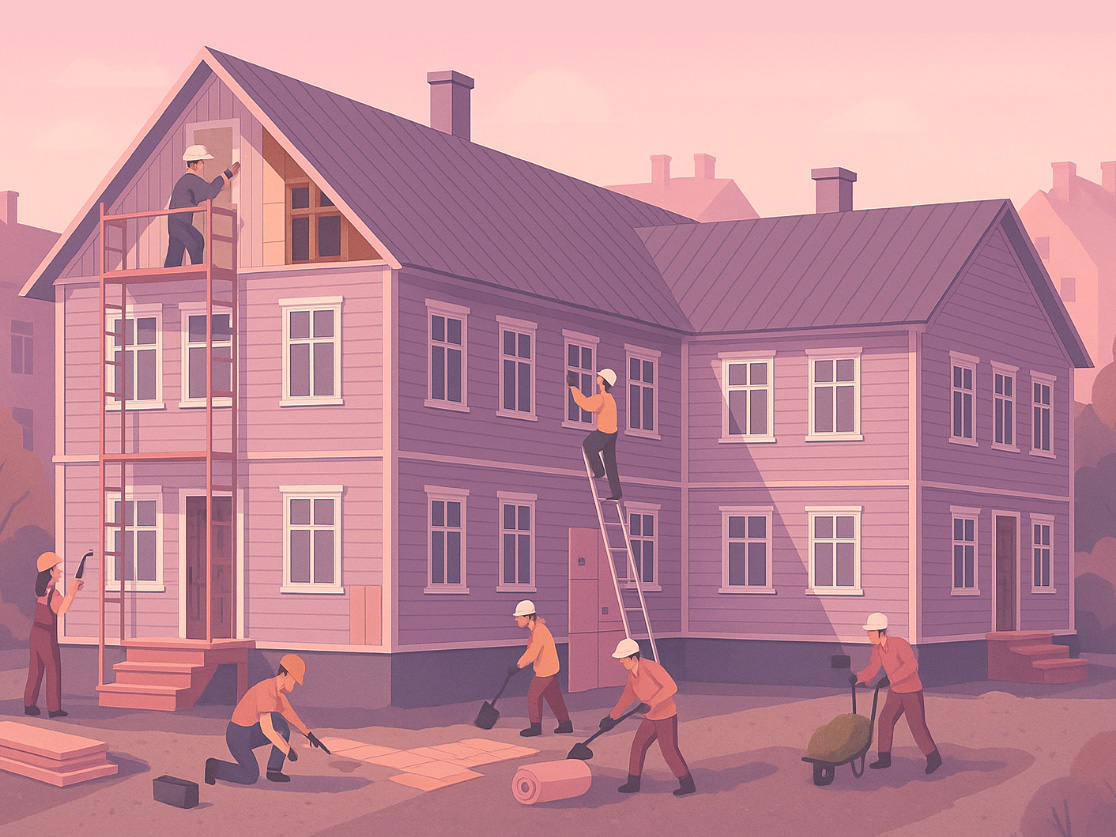
Created by Kirils Gončarovs with the use of A.I.
CHALLENGES
Karlova’s heritage regulations restrict cost-effective, energy-efficient renovations, which risks gentrification and resident displacement. A lack of external funding limits the scope of renovations, forcing residents to rely on small loans for gradual upgrades. Finding a long-term, sustainable financing solution remains a key challenge for the community.
INNOVATION
Labour, costs, and community building: affordability is achieved by applying for smaller loans at a time and carrying out renovation work in stages. Good decision-making procedures and the high level of inclusivity of all members enabled the community to proceed with the renovation.
Blocking factors
- Financial: difficult to acquire the necessary funding.
- Institutional: heritage requirements increase renovation costs.
Facilitating factors
- Internal governance: residents show strong internal coordination and financed the renovation independently.
IMPACTS
Community Impact
The renovation process and participation in highly localised decision-making empowered the residents of the building, as their engagement in the community is limited by other factors. The improvements to their living conditions demonstrated the potential for change.
Policy Impact
The city of Tartu needs to address the systemic effect of milieu protection requirements on buildings, as well as on residents’ capacity to improve their living conditions.
UPSCALING
POTENTIAL
Scaling up the project could involve creating structured opportunities for knowledge exchange among residents, for example by building on existing district events such as the self-organised home café run by residents. One of the initiators suggested making more intentional use of these gatherings by facilitating dialogue, social activities and workshops in a welcoming setting.
EXPLORE ALL
PREFIGURE’s ‘Prototypes of Change‘ showcase 16 innovative, real-life responses to energy-housing precarity in the form of social, political, and economic solutions across eight countries: Bulgaria, Denmark, Estonia, Germany, Greece, Spain, Sweden and the Netherlands.